
Free tool
Moisture Meter Readings: Is It Wet or Dry?
Use this tool to make sense of moisture meter readings after water damage. Compare a reading from the wet area with one from a dry spot of the same material, and see whether it has reached its dry standard.
Moisture meter reading checker
Use the same meter and the same setting for both readings. This is a general guide, not a substitute for a professional moisture inspection.
How to take a useful reading
- Find a dry reference first: the same material, in a room the water never reached.
- Test the wet area at several points, starting where the water was deepest and working outward.
- Write down each reading with the date and time, so you can see whether numbers are falling.
- For wood, set the meter to its wood scale if it has one. For drywall and concrete, compare against your dry reference rather than a fixed number.
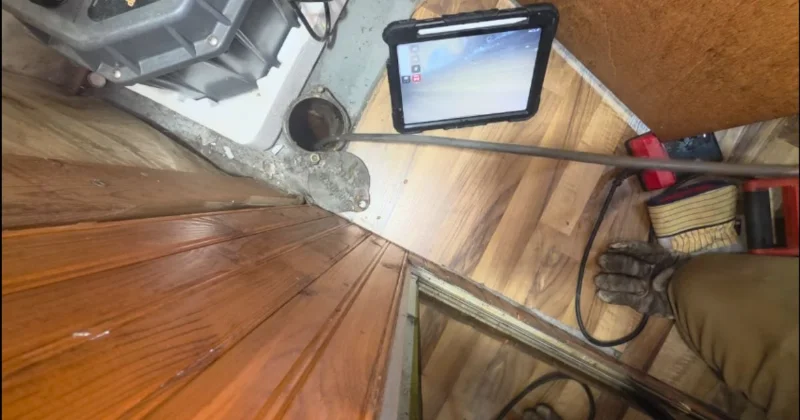
Pin or pinless: which meter are you using?
Most home moisture meters come in two types. A pin meter pushes two small metal prongs into the material and measures how easily a tiny current passes between them. Wet material conducts better, so the number goes up. Pin meters are precise at the exact spot you test, but they leave small holes.
A pinless meter has a flat pad you press against the surface. It reads a short distance into the material without damaging it, which makes it faster for scanning a whole wall. The trade-off is that it averages over a wider area and can be thrown off by metal, tile backing or a nail behind the drywall.
Neither type is wrong. What matters is using the same meter, on the same setting, for every reading you compare.
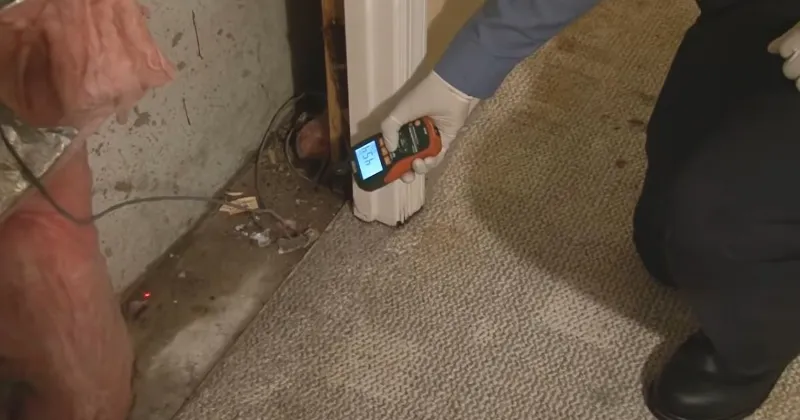
What the numbers usually mean
Readings depend on the meter, the scale and the material, so treat these as rough guides, not pass or fail lines.
- Wood on a wood scale: a percentage that comes close to the wood's real moisture content. Indoor framing and subfloors in Boulder's dry climate often sit in the single digits. A reading well above your dry reference means water is still in there.
- Drywall and plaster: most meters show these on a relative or reference scale, not a true percentage. Only the comparison with an untouched wall tells you anything.
- Concrete: slabs hold water for a long time and release it slowly. A surface that feels dry can still read high, so test again over several days.
Why your dry reference matters so much here
Charts printed on meter packaging are often written for humid regions. Our air is much drier, so the normal moisture level in local wood and drywall tends to run lower than those charts expect. A number that looks "fine" on the box can still be several points wetter than the same material in your hallway. That is why this checker compares your wet reading with a dry one from your own house instead of a fixed number.
Common mistakes that skew readings
- Testing only one spot. Water travels sideways under flooring and up inside walls. Take a row of readings from the wet zone outward until the numbers match the dry reference.
- Reading over metal. Corner bead, nails, foil-backed insulation and pipes behind the wall can push a pinless reading up.
- Switching meters halfway through. Two brands can show different numbers on the same board. Stick with one.
- Ignoring the scale setting. Testing drywall on a wood setting, or the reverse, gives numbers that can't be compared.
- Testing right after mopping. Surface dampness gives a false high. Wait until the surface has had time to air off.
When the numbers say call for help
Some readings are worth acting on fast. If wet readings are still high two days after the water stopped, if they climb instead of fall, or if a wall reads high a foot or more above the floor, water has soaked in further than fans can reach. The same goes for a subfloor that reads wet from below in a crawl space. Those are signs of deeper saturation that needs commercial drying and a full moisture map.
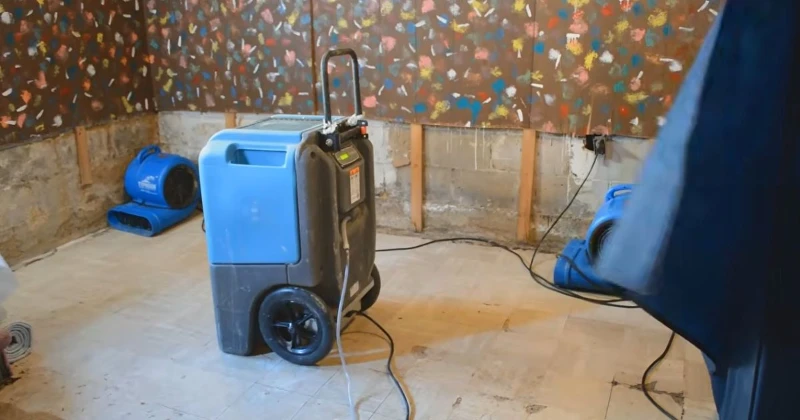
How a crew uses readings
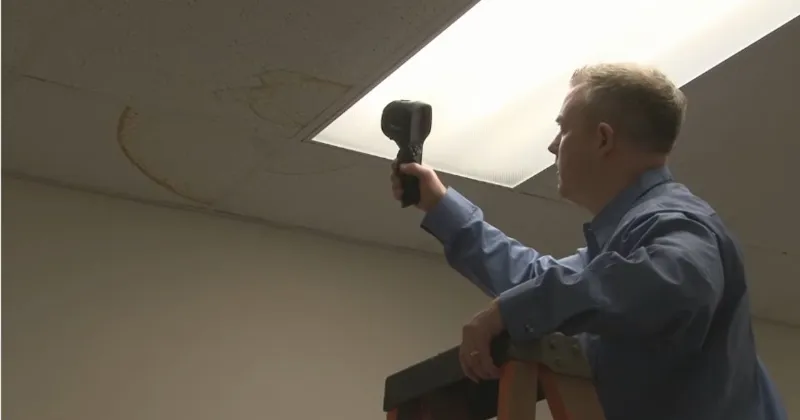
On a professional job, the technician marks a dry reference for each material, maps the wet area room by room and logs every reading with the date. Thermal imaging helps spot cool, damp patches behind surfaces before the meter confirms them. Readings are taken daily and handed to you as a drying log, so you can see the numbers fall and know exactly when each area reached its dry standard.
Moisture meter readings FAQ
Can I trust a cheap moisture meter?
For comparing wet and dry spots in your own home, an inexpensive meter is useful. It is less reliable for exact numbers, so always compare against your own dry reference.
How often should I check readings while things dry?
Once a day, at roughly the same time, in the same marked spots. Daily numbers show the trend, and the trend is what tells you if drying is working.
Is a normal reading proof there is no hidden water?
Not always. Meters read only so deep, and water can sit behind cabinets, under tile or inside wall cavities. If you smell mustiness or see staining, have it checked even when the surface reads dry.
Readings still high?
Professional meters and drying equipment, at your door within the hour.