Free tool
Water Damage Glossary: Restoration Terms in Plain English
This water damage glossary explains the words your restoration crew and insurance adjuster use, so you know exactly what is happening at every step.
44 terms
- Actual cash value
- A way of paying a claim that subtracts depreciation, so you receive what an item was worth at the time of the loss rather than the cost of a new one.
- Adjuster
- The person your insurance company sends to review the damage and decide what the policy covers.
- Affected area
- Every part of the structure the water reached, including spots behind walls and under flooring that look dry.
- Air mover
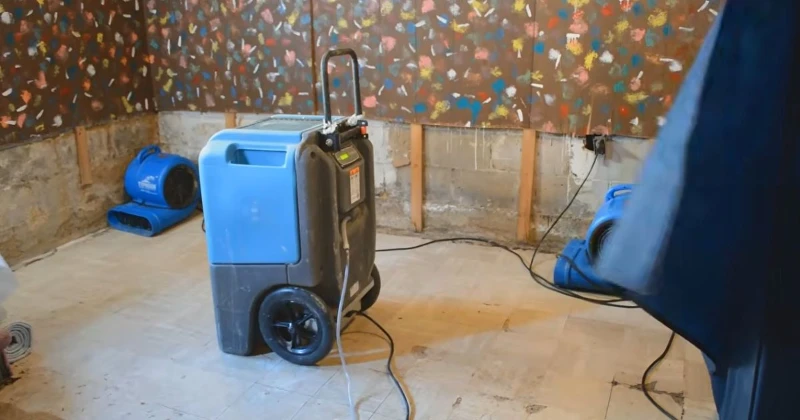
- A high-speed fan aimed low across wet surfaces to speed up evaporation.
- Antimicrobial
- A treatment applied to surfaces after cleaning to discourage the growth of bacteria and mold while things dry.
- Category 1 water
- Clean water from a source like a broken supply line. It can degrade if it sits.
- Category 2 water
- Gray water. It carries enough contamination to cause illness if touched or swallowed, so surfaces it reaches get cleaned before drying.
- Category 3 water
- Black water, the most contaminated kind. Think sewage, toilet backups with waste, or flooding that came in from outdoors.
- Class 1
- The smallest damage class: a limited area with little water soaked in.
- Class 2
- A full room of damage, where flooring and the bottom of the walls have taken on water.
- Class 3
- The most water, often from overhead, saturating ceilings, walls, insulation and subfloor.
- Class 4
- Moisture trapped deep inside slow-drying materials such as hardwood floors, old plaster or a concrete slab, which calls for specialty equipment.
- Contents inventory
- A written and photo list of belongings, made before they are packed out.
- Crawl space
- The low, unfinished space under some homes. Water collects here easily and is slow to dry without ventilation and equipment.
- Dehumidifier
- A machine that pulls water vapor out of the air so wet materials can keep drying.
- Desiccant dehumidifier
- A dehumidifier that uses a moisture-absorbing material, useful in cold spaces where standard units slow down.
- Dry standard
- The moisture reading of the same material in an unaffected area. Drying is done when wet areas match it.
- Drying log
- The dated record of every moisture reading taken during a job, from first visit to dry.
- Equilibrium moisture content
- The moisture level a material settles at in its normal surroundings. In a dry climate like ours, it runs low.
- Extraction
- Removing standing water with pumps and vacuums before drying starts.
- Flood cut
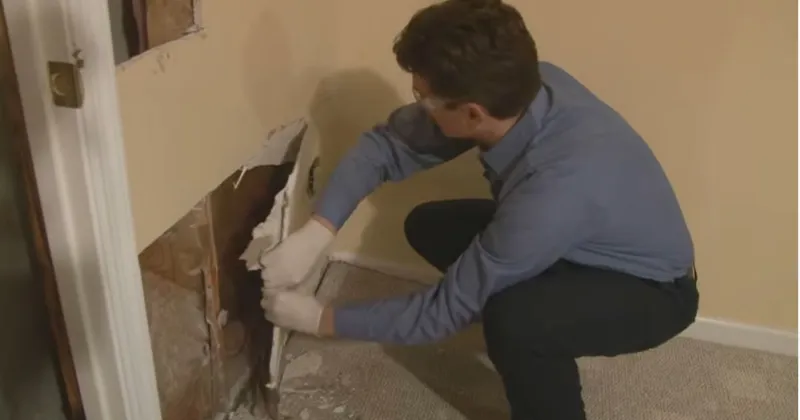
- A straight cut along drywall, a set distance above the waterline, so the wet lower section can be removed and the cavity dried.
- Hygrometer
- An instrument that measures humidity in the air, used to check that dehumidifiers are doing their job.
- IICRC
- The Institute of Inspection, Cleaning and Restoration Certification, which trains and certifies restoration technicians.
- Mitigation
- The work that stops damage from getting worse: extraction, drying and documentation.
- Moisture mapping
- Measuring and marking how far water traveled through floors, walls and ceilings.
- Moisture meter
- A handheld tool that measures how much moisture is in a material.
- Pack-out
- Moving belongings out of the wet area for cleaning, drying or storage.
- Proof of loss
- A signed statement to your insurance company listing what was damaged and how much you are claiming.
- Psychrometrics
- The science of air temperature, humidity and evaporation that drives drying decisions.
- Relative humidity
- How much water vapor the air holds compared with the most it could hold at that temperature.
- Replacement cost
- A way of paying a claim based on what it costs to replace an item with a new one of similar kind and quality.
- Restoration
- Rebuilding and repairs after drying, such as new drywall or flooring.
- Scope of work
- The written description of the work a job needs, which adjusters use to review a claim.
- Secondary damage
- Harm that happens after the first event because things stayed wet, such as swelling, warping, odor or mold.
- Selective demolition
- Removing only the materials that can't be saved, rather than gutting a whole room.
- Structural drying
- Drying a building's framing, subfloor and walls to the dry standard with air movers and dehumidifiers.
- Subfloor
- The structural layer under your finished flooring, usually plywood or particleboard.
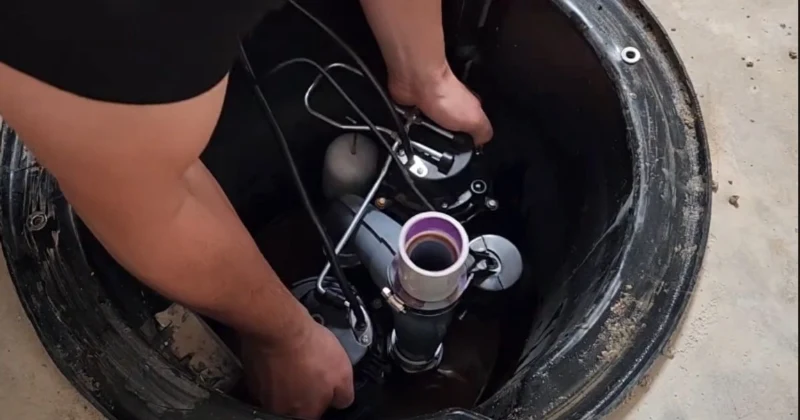
- Sump pump
- A pump in a pit at the lowest point of a basement that sends groundwater out before it can rise.
- Thermal imaging
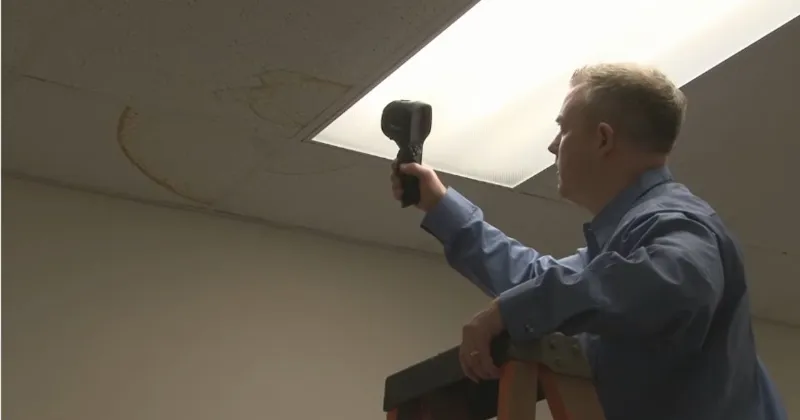
- A camera that shows temperature differences, helping find hidden moisture behind surfaces.
- Vapor barrier
- A plastic sheet or coating that slows moisture moving through a floor, wall or crawl space.
- Water backup endorsement
- An add-on to a homeowners policy that can cover damage from sewer or drain backups.
- Wicking
- Water moving up into drywall and other porous materials from a wet floor.
- Zone AE
- A FEMA flood zone where the yearly odds of a flood are 1% or higher. People often call it the 100-year floodplain.
The words you will hear most on day one
On the first visit, five terms come up more than any others. Category tells you how clean or dirty the water is. Class tells you how much water soaked in and how hard it will be to dry. The dry standard is the target every reading is measured against. The drying log is where those readings are recorded each day. The scope of work is the written plan of what will be done. Know those five and most of the conversation will make sense.
Water damage glossary FAQ
What is the difference between category and class?
Category describes the water itself, from clean to heavily contaminated. Class describes the damage, based on how much water was absorbed and by what. A job always has one of each.
Why does my adjuster use different words than the crew?
Adjusters use policy language, like actual cash value or proof of loss. Crews use drying language, like air movers and dry standard. Both are describing the same job from different sides.
Have a question the glossary didn't answer?
Call and ask. Someone picks up every hour, and there is no charge to call.