
Ceiling Water Damage in Boulder, CO
Ceiling water damage shows up as a wet spot, a stain, or a sag, and it means water is coming from somewhere above: a pipe, a bathroom, a unit upstairs, or ice backing up under your roof. The danger is not just the stain. A sagging ceiling holds water weight and can collapse without warning. Call (303) 479-3055 now if your ceiling is wet or bulging. We are on-site within 60 minutes.
Water Dripping or a Ceiling Sagging? Do This Now
- Move out from under a sagging bulge immediately. A water-logged ceiling section can drop without warning. Keep people and pets clear.
- Turn off electricity to that area if the ceiling is near a light fixture or outlet. Water and electrical wiring in a ceiling cavity are a serious hazard.
- Keep the room clear. Do not stand under a bulging ceiling or try to puncture it yourself. Water-soaked drywall is heavy and there may be electrical wiring behind it. Place buckets to catch drips from a safe distance and wait for our crew.
- Find and stop the source above. Shut the main water valve if a pipe is involved. Turn off water to the toilet or washing machine if one of those is the culprit.
- Call us at (303) 479-3055. We will tell you what else to do before the crew arrives.
Where Ceiling Water Damage Comes From
Water in a ceiling almost never comes from directly above the stain. It travels along rafters, joists, and pipes until it finds a low point and drips down. The stain on the ceiling can be several feet from the actual source. This is why finding the source requires tracing water back, not just looking at what is wet.
Common sources in Boulder homes:
- Plumbing above: A supply line, toilet, sink drain, or bathtub on the floor above. A burst pipe on the second floor is one of the most common causes in multi-story homes and in condos or apartments where a unit above you has plumbing.
- Ice dams: Boulder averages about 89.7 inches of snow per year (NOAA), with February and March the snowiest months. When snow on the roof melts during the day and refreezes at the eaves at night, it builds an ice dam, a ridge of ice that blocks meltwater from draining off the roof. That water backs up under shingles and into the ceiling. Ice dam damage is common in older North Boulder and Mapleton Hill homes with inadequate roof insulation.
- Roof leak: A missing shingle, failed flashing, or cracked valley. The roof itself is a roofer’s job. We handle the ceiling water damage inside once the roof is patched.
- Upstairs bathroom: An overflowed toilet or tub, a shower that leaks at the pan or door, a slow drain that backed up. Boulder reviews include multiple accounts of an upstairs faucet leaking through two floors before anyone noticed.
- Unit above (condos and apartments): Boulder has a high proportion of condos and apartments, 43% of housing is in apartment complexes (NeighborhoodScout), concentrated in Gunbarrel, University Hill, and near CU. A leak from the unit above is a common situation for condo owners and tenants across the city.
How We Dry a Water-Damaged Ceiling
The source has to be fixed before the ceiling can be dried, if the leak is still active, drying is pointless. Once the source is stopped:
Ceiling Water Damage Assessment and Moisture Mapping
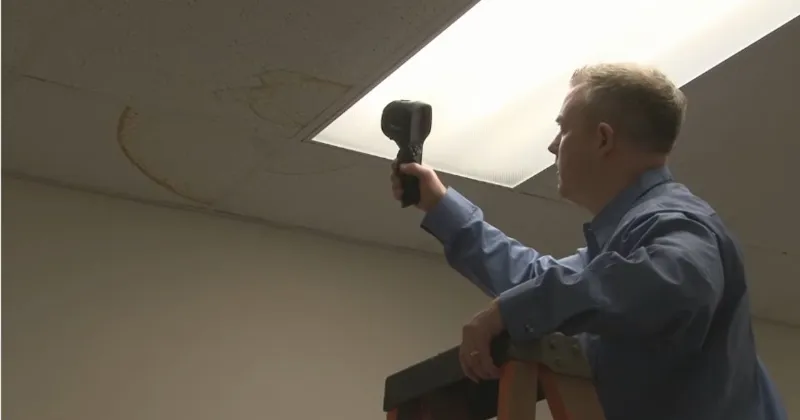
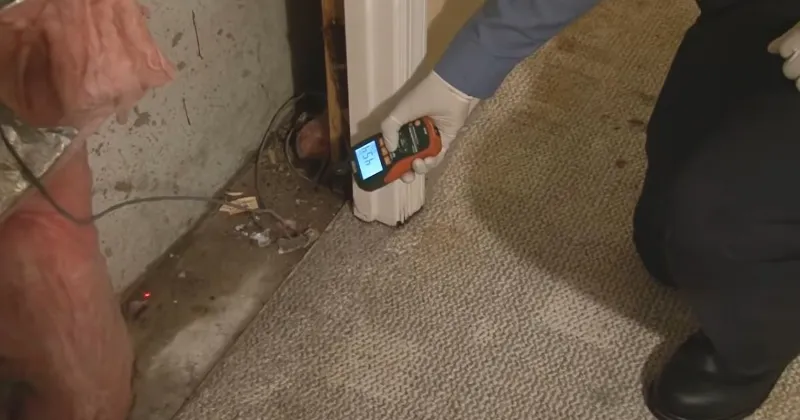
We use moisture meters and thermal imaging during the water damage inspection to map the actual extent of the wet area. The visible stain is usually smaller than the actual wet zone in the ceiling cavity. This matters because drying equipment has to cover the full wet area, not just what you can see.
Opening the Ceiling Safely
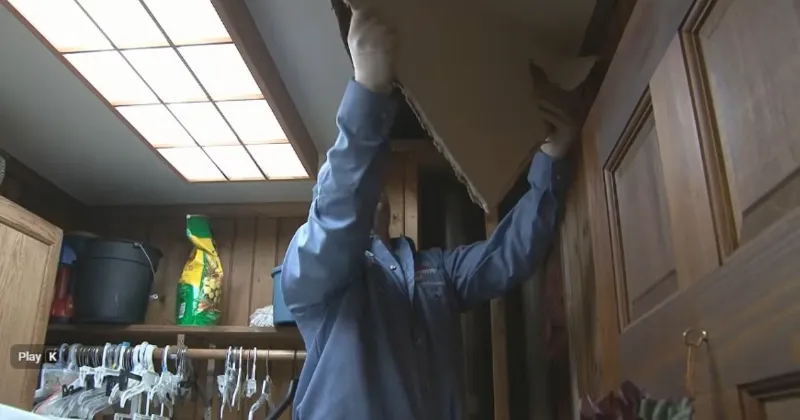
If the ceiling needs to be opened. This is required when drywall is saturated, insulation is wet, or moisture readings show high levels in the cavity, we do it carefully and with your written approval. We photograph the cavity before removal and document the condition of joists, insulation, and any other materials above.
Important: older Boulder homes, particularly those built before 1980, may have drywall or popcorn ceilings that contain asbestos. We will flag this during the assessment. Asbestos-containing materials require testing before demolition, this is not something to skip.
Drying the Cavity and Insulation
Industrial air movers are positioned to circulate air through the ceiling cavity. LGR dehumidifiers pull moisture out of the air in the room below. If insulation in the ceiling is wet, it usually has to come out, wet fiberglass insulation loses its R-value and cannot be effectively dried in place. Wet blown-in insulation is similarly removed.
We take daily moisture readings and document everything. Equipment stays until readings reach IICRC dry standard. We text you a photo of the moisture readings every day so you never have to wonder what is happening while equipment is running in your house. You get the drying log, dated photos, daily numbers, and a written scope your insurance adjuster can use.
What Happens If You Wait
A ceiling stain that dries on its own is not a solved problem. The water that caused it is still in the ceiling cavity, soaking into joists, insulation, and the top side of the drywall. Without airflow and dehumidification, that trapped moisture stays put. Within two to three weeks, mold can start growing on wet wood and drywall paper in the ceiling cavity where you cannot see it. Within six weeks, structural wood that stayed wet can begin to soften.
The other risk is a second event. If the source was not properly fixed, the next heavy use of that bathroom or the next freeze cycle will send water into the same weakened ceiling. A ceiling that held water once and was not dried or repaired is more likely to collapse the second time.
The cost of drying a ceiling early is almost always less than the cost of tearing out a ceiling that grew mold because no one opened it up in time.
Can a Water-Stained Ceiling Be Dried, or Does It Need Replacing?
It depends on how wet it is and what caused it:
- Small, dry stain from an old, resolved leak: If the ceiling is structurally intact, dry on a moisture meter, and the source is fixed, a water stain often does not need replacement. A coat of stain-blocking primer and paint usually takes care of it. This is an honest answer. We will tell you this if that is the case.
- Wet, soft, or sagging drywall: Drywall that has been saturated is typically replaced. It does not dry back to its original structural strength and is likely to crumble, stain through paint, or harbor mold.
- Wet insulation above: Almost always removed and replaced, wet insulation cannot be dried effectively in place.
We give you an honest answer when we assess the job, not a recommendation to replace more than necessary. We give you a written itemized estimate before any work starts.
Ice Dams in Boulder Winters
Boulder’s heavy snow months, February and March, combined with its frequent warm-then-cold weather cycles create ideal ice dam conditions. Heat escaping through a poorly insulated attic melts the snow on the roof. That meltwater runs down toward the cold eaves, refreezes, and builds up a dam. Water pools behind the dam and backs under shingles.
Signs of ice dam damage inside the home: a wet ceiling stain that appears or grows during or after a snowstorm, dripping from ceiling light fixtures, or staining near exterior walls on upper floors. The fix for the ice dam itself is a roofer, removing the dam carefully and improving attic insulation and ventilation to prevent recurrence. We handle the water damage inside: finding how far the water went, drying the ceiling cavity and insulation, and documenting the damage for your insurance claim.
Condo and Apartment Leaks: Who to Call
When water comes from the unit above in a Boulder condo or apartment, the situation involves multiple parties: you, your neighbor upstairs, the HOA, and potentially two or three insurance policies. Here is a practical approach:
- Notify the neighbor above and the HOA or property manager immediately. They need to know so the source can be found and stopped.
- Document everything before any cleanup starts. Photos and video of the ceiling, the stain, and any personal property damaged.
- Your HOA documents and your condo owner’s insurance determine who is responsible for what. We do not give legal advice, but we can tell you that having documentation (photos, moisture readings, written scope) is what your insurer and your HOA will need.
We work with both owner-occupied and rental units across Boulder, including University Hill, Gunbarrel, and CU-adjacent neighborhoods where multi-unit water damage is common. We have worked jobs where water from one unit traveled through two floors before anyone noticed. The sooner the source is stopped and drying starts, the less damage spreads to neighboring units.
Cost Drivers and Insurance
What drives the cost of ceiling water damage cleanup:
- How much ceiling area is wet
- Whether insulation in the ceiling cavity is saturated
- How long the water has been there
- Whether asbestos testing is required (pre-1980 homes)
- Ceiling height. High or vaulted ceilings require different equipment setup and more labor
Burst pipe and appliance leak damage to ceilings is often covered under standard homeowners policies as sudden and accidental, but every policy is different. Look at your declarations page or call your agent to confirm what is covered. Roof leak coverage depends on the cause and your specific policy. We give you dated photos, daily moisture readings, and a detailed written scope for your adjuster to review.
What to Do Before the Crew Arrives
After you shut off the water source and call us, there are a few things you can do safely while waiting.
Move furniture, electronics, and anything valuable away from the wet area. If water is dripping onto a floor, lay down towels or place buckets to catch it. Do not try to remove wet ceiling material yourself.
Take photos and video of everything before you touch it. Walk through the affected rooms. Document the stain, any dripping, any bulging, and any belongings that got wet. Your phone’s timestamp on those photos matters for insurance.
Do not turn on ceiling fans or light fixtures in rooms where the ceiling is wet. If water is near any electrical outlet, fixture, or panel, stay clear. Turn off the breaker for that area if you can do it safely.
Open interior doors to help air circulate, but do not open windows in freezing weather. Cold air will not dry the space and can cause additional damage to wet materials. Keep the heat running at normal temperature to help moisture evaporate from surfaces.
Frequently Asked Questions
Is a sagging, wet ceiling dangerous?
Yes. A water-logged ceiling section can collapse without warning and may bring down electrical wiring or debris. Keep people and pets clear of the area, do not stand under it or try to puncture it. Turn off electricity to that area if you can safely reach the breaker, keep everyone out of the room, and call us. Our crew knows how to relieve ceiling water safely.
How do I find where the ceiling leak is coming from?
Water travels along structural members before dripping down, so the stain is often not directly below the source. Look for the source by going to the floor above during active dripping, trace wet areas back toward the highest point. Our team uses infrared cameras and pin-type meters to map the full path.
What Boulder ZIPs and neighborhoods do you serve?
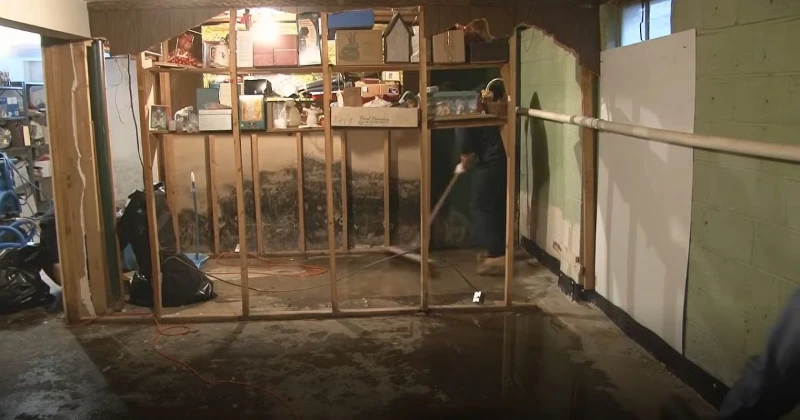
We serve ZIP codes 80301, 80302, 80303, 80304, and 80305, the full city of Boulder including Downtown and Mapleton Hill, University Hill, North Boulder, Table Mesa, Martin Acres, East Boulder and Frasier Meadows, Wonderland Hills, Chautauqua and Newlands, and Gunbarrel and northeast Boulder. If your basement is flooded, we handle that too.
Call Now, We Answer 24/7
For ceiling water damage, a sagging ceiling does not wait. Call (303) 479-3055 now, 24/7, nights and weekends, no after-hours surcharge.
Boulder CO Water Damage Restoration
Phone: (303) 479-3055
Email: info@bouldercowaterdamage.com