Floor Carpet and Drywall Water Damage in Boulder, CO
When water gets into your floors, carpet, or walls and you are dealing with floor carpet drywall water damage, the question everyone asks first is: does this have to come out? The honest answer depends on the type of water, how long it has been wet, and what the moisture readings show. We give you a straight answer on the phone and in person. Call (303) 479-3055, we answer 24/7.
What This Guide Covers
- Wet Floors or Walls? What to Do in the First Hour
- What Can Be Saved: A Material-by-Material Guide
- Can Wet Carpet Be Saved?
- Can Water-Damaged Hardwood Be Dried Flat?
- Why Do We Cut Drywall, and How High?
- How Do I Know If There Is Water Behind My Walls?
- Drying vs Rebuild: Who Puts It Back
- Drying Timeline
- Boulder-Specific Considerations
- Frequently Asked Questions
Wet Floors or Walls? What to Do in the First Hour
- Stop the water source if you can. Every minute it runs, it spreads further.
- Move furniture off wet flooring. Wood and composite furniture absorb water quickly and start staining floors within hours.
- Do not run a shop vac over sewage or flood water. Those require personal protective equipment and proper disposal.
- Do not turn on fans if the water source is sewage or outside flood water. Moving air spreads contamination.
- Call us for emergency water removal at (303) 479-3055.
What Can Be Saved: A Material-by-Material Guide
This is the question that matters most on any floor, carpet, drywall water damage job. Here is an honest breakdown by material and water type:
| Material | Clean water (Cat 1), caught fast | Gray water (Cat 2), sat a bit | Sewage or flood (Cat 3) |
|---|---|---|---|
| Carpet | May be saved with fast extraction | Often removed | Always removed |
| Carpet pad | Almost always removed | Removed | Removed |
| Solid hardwood | May dry flat with equipment; some cupping may remain | Often saveable but with cupping risk | Removed |
| Engineered hardwood | Often saveable with fast drying | Risk of delamination | Removed |
| Laminate / LVP | Laminate usually removed (swells); LVP often saveable | Laminate removed; LVP assess on the job | Removed |
| Tile (intact grout) | Cleaned and dried | Cleaned and dried | Disinfected |
| OSB/plywood subfloor | Dryable if caught early | Assess on the job | Removed |
| Particleboard subfloor | Usually replaced, swells and loses strength | Replaced | Replaced |
| Drywall | May be dried in place or with wall cavity drying | Flood cut likely | Removed |
| Insulation (fiberglass) | Assess on the job | Usually removed | Removed |
This table is a guide. The actual decision is made based on moisture readings, how long the water has been there, and what the water category is. We do not remove more than what the readings and the IICRC S500 standard call for.
Can Wet Carpet Be Saved?
In a floor, carpet, drywall water damage situation, carpet can sometimes be saved if: the water was clean (Category 1, from a burst pipe or clean appliance), extraction starts within a few hours, and the carpet is extracted with a water claw and dried quickly. Carpet can feel dry on top while the pad underneath is still soaked. The pad almost always has to come out, it absorbs and holds water like a sponge, cannot be dried fast enough to prevent mold, and is inexpensive to replace compared to the cost of mold remediation.
If the water was gray (a washing machine overflow that sat overnight) or black (sewage, flood water), the carpet comes out. There is no safe way to dry contaminated carpet in place.
Can Water-Damaged Hardwood Be Dried Flat?
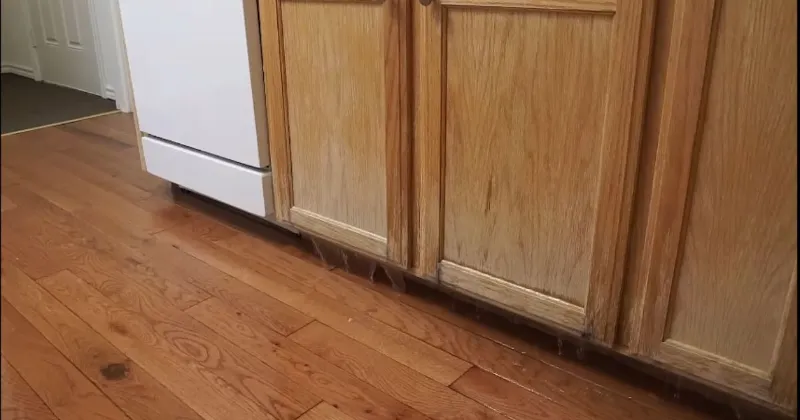
Solid hardwood that cups, meaning the edges rise higher than the center, can often be dried back to near-flat with controlled drying. This takes time and the right equipment, including drying mats that pull moisture directly from the wood surface. Boulder reviews include “saved our engineered hardwood” as one of the most appreciated outcomes on water damage jobs.
Honest expectations: hardwood that has cupped or crowned significantly may not fully flatten after drying. The wood fibers have expanded and compressed; some memory of that remains. We will tell you what to expect before you decide whether to try drying or replace.
Laminate almost always has to come out, the core swells when wet and does not return to its original dimensions after drying. Luxury vinyl plank (LVP) is more water-resistant and can often be saved if extraction starts quickly.
Why Do We Cut Drywall, and How High?
This question comes up on almost every water damage job. Here is the honest answer:
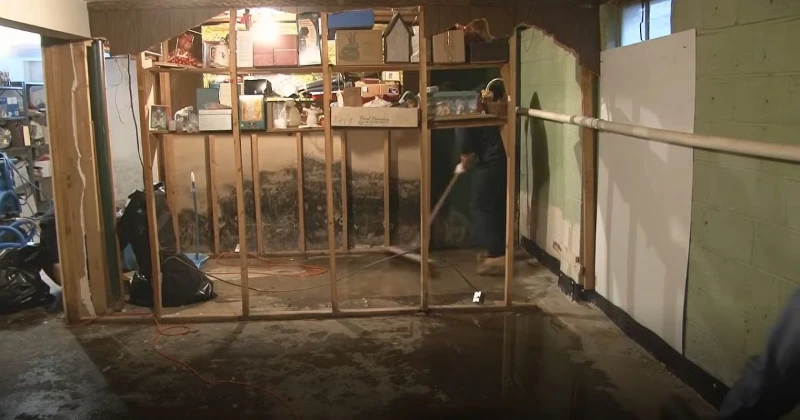
When water contacts drywall, it wicks upward through the gypsum core. What you see as a wet line at baseboard height is not where the water stopped. It may have wicked two, three, or even four feet up inside the wall cavity, depending on how long it was wet. Standard practice is to cut the drywall about two feet above the visible water line. This is called a flood cut.
Why cut at all, instead of just drying? Because:
- Wet drywall is not dryable in place for most water categories. The paper facing traps moisture against the gypsum core and inhibits drying.
- The wall cavity, insulation, framing, bottom plate, cannot be dried without airflow, which requires the drywall to be open.
- Closing up a wall before the cavity is confirmed dry leads to mold inside the wall, a much more expensive problem discovered weeks later. See our mold after water damage page for more on that outcome.
For clean water caught very early, wall cavity drying, small holes drilled below the baseboard line to inject drying air, can sometimes save the drywall without cutting. We will tell you honestly whether that is an option based on the readings. Any drywall removal gets your written approval first.
How Do I Know If There Is Water Behind My Walls?
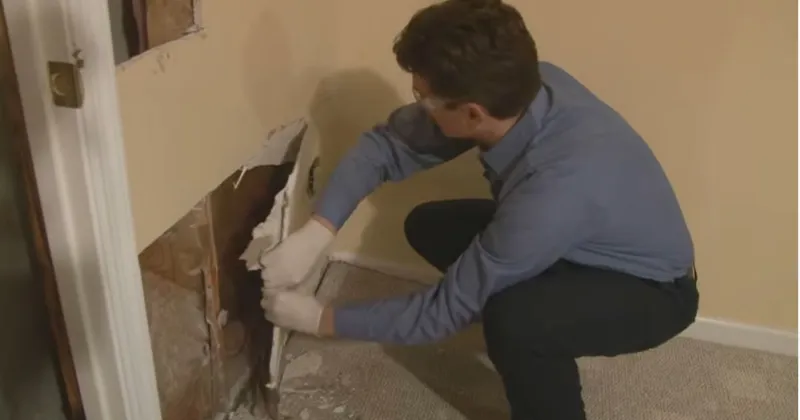
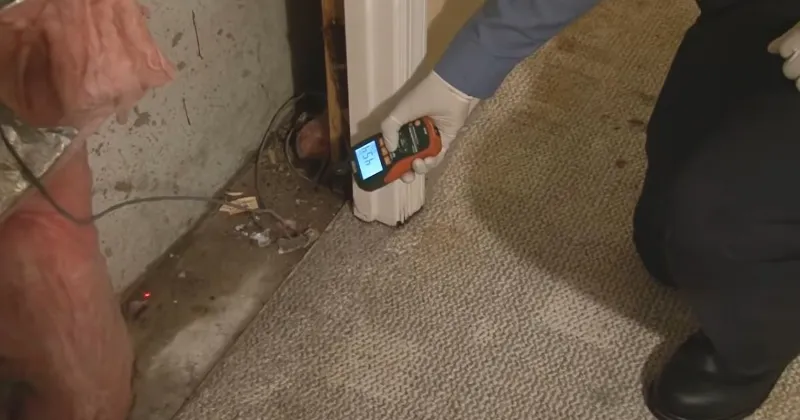
Signs of hidden water behind walls: a soft or spongy spot when you press on drywall, bubbling or peeling paint, a baseboard that is lifting or warping, a musty smell without visible water, or a stain that reappears after painting. We use thermal imaging cameras and moisture meters to find wet areas that are not visible. A thermal camera shows temperature differences in the wall that suggest moisture; a moisture meter inserted into the drywall confirms the actual wet level.
Drying vs Rebuild: Who Puts It Back
The drying phase ends when moisture readings confirm dry standard. We dry the structure and remove unsalvageable materials. We do not hang new drywall, install new flooring, or paint. That is a rebuild scope, a separate contract with a general contractor. This is industry-standard, and we explain it clearly before the job starts so you are not surprised when drying is done and you need to find a contractor for the next phase.
What to Expect from the Drying Timeline on Floor, Carpet, Drywall Water Damage
One of the most common questions on a floor, carpet, drywall water damage job is: how long will the equipment need to run? The honest answer is that drying to confirmed standard takes two to five days for most residential jobs, and it depends on the material, how long it was wet, and the ambient conditions in the space.
General drying timelines by material:
- Wall cavities after flood cut: two to four days with air movers and dehumidifiers running. We take daily moisture readings and document them. Drying ends when readings confirm dry standard across all monitored points. Our water damage process page explains how we document every step, not on a fixed calendar.
- Concrete slab (exposed): three to seven days depending on slab thickness and how long it was wet. Concrete holds moisture deep in its mass; surface readings can look fine while the core is still elevated. We track readings at multiple points.
- Solid hardwood floors: five to ten days or more. Hardwood drying takes time and equipment, particularly drying mats that pull moisture directly from the wood surface. We will tell you after the first day of readings whether the wood is trending toward dry or whether replacement is the realistic outcome.
- Engineered hardwood: three to six days in most cases. More stable than solid but still needs controlled drying to avoid delamination.
- Basement slab and walls: can extend seven to fourteen days if the water penetrated via hydrostatic pressure and the soil outside is still wet. Boulder basements near creek corridors and high-groundwater areas sometimes require longer drying cycles for this reason.
We document moisture readings at every visit. You receive a daily log showing exactly what each monitored point reads, so the drying timeline is not a guess and your insurance adjuster can see the progression from wet to dry standard.
Boulder-Specific Considerations for Water-Damaged Materials
Boulder homes have a few characteristics that affect how floor, carpet, drywall water damage jobs unfold differently than average:
Finished basements near Boulder Creek and Goose Creek: these areas have documented high groundwater. See our basement water removal page for more on below-grade flooding. When water comes up through the slab or cold joint rather than through a failed appliance or supply line, it is often Category 2 or Category 3 depending on what is in the groundwater. That changes what can be saved. Carpet and pad come out. Any drywall that made contact with the water line is typically flood cut.
Older homes with original hardwood: Boulder has a large number of homes built in the 1950s, 1960s, and 1970s with original solid hardwood floors. Many of these have survived previous generations of minor water events and have been refinished multiple times. Saving original hardwood is often a priority for Boulder homeowners, and in many cases it is achievable. We will give you realistic expectations after the first moisture reading, not a premature decision to replace.
Tile over old mortar beds: homes from that era often have tile set in a thick mortar bed rather than on cement board. That mortar bed holds water like a sponge and can stay elevated for weeks. If you have older tile in a bathroom or kitchen that had water underneath, the readings under the tile are what matter, not the surface reading on top of the tile.
Luxury vinyl plank (LVP) over concrete slabs: LVP installed as a floating floor over a concrete basement slab can trap moisture underneath after a water event. We use pinless meters and inspection holes at the perimeter to check the slab and the LVP base layer separately. LVP is often salvageable; the question is whether the slab under it has fully dried.
Frequently Asked Questions
Can wet drywall always be saved without cutting it?
Not always. Clean water caught within hours may be dryable with wall cavity drying, small holes and air injection. Drywall wet for more than a day, or wet from gray or black water, is typically replaced. Moisture readings decide, not guesswork. We will tell you which approach makes sense before any work starts.
Does wet drywall always mean mold?
Not immediately. The EPA recommends drying wet materials within 24 to 48 hours to help prevent mold growth. Wet drywall dried quickly and completely, confirmed by moisture readings, does not necessarily develop mold. Wet drywall that is closed up without being confirmed dry almost always does. This is why we document dry readings before any wall is closed.
How much does floor, carpet, drywall water damage cleanup cost?
Cost depends on the size of the affected area, what materials are involved, and how long the water sat before extraction started. A typical residential job covering one to three rooms runs in the range of a few thousand dollars for drying and removal of unsalvageable materials. We provide a written, itemized estimate before any work begins so you know the full scope. If additional work is needed beyond the original estimate, we get your written approval first.
Should I file an insurance claim for water-damaged materials?
Every policy is different, so check your declarations page or call your agent to understand what your policy covers. Most homeowner policies cover sudden and accidental water damage from internal sources like a burst pipe or appliance failure. Flood damage from outside water typically requires separate flood insurance. We document every step of the job with dated photos and moisture readings, which gives your adjuster the information they need to process the claim.
What Boulder ZIPs and neighborhoods do you serve?
We serve ZIP codes 80301, 80302, 80303, 80304, and 80305, covering the full city of Boulder including Downtown and Mapleton Hill, University Hill, North Boulder, Table Mesa, Martin Acres, East Boulder and Frasier Meadows, Wonderland Hills, Chautauqua and Newlands, and Gunbarrel and northeast Boulder.
Call Now, 24/7, No After-Hours Charge
Call (303) 479-3055 now. We answer 24/7 and will give you an honest answer about what can be saved before the crew even arrives.